

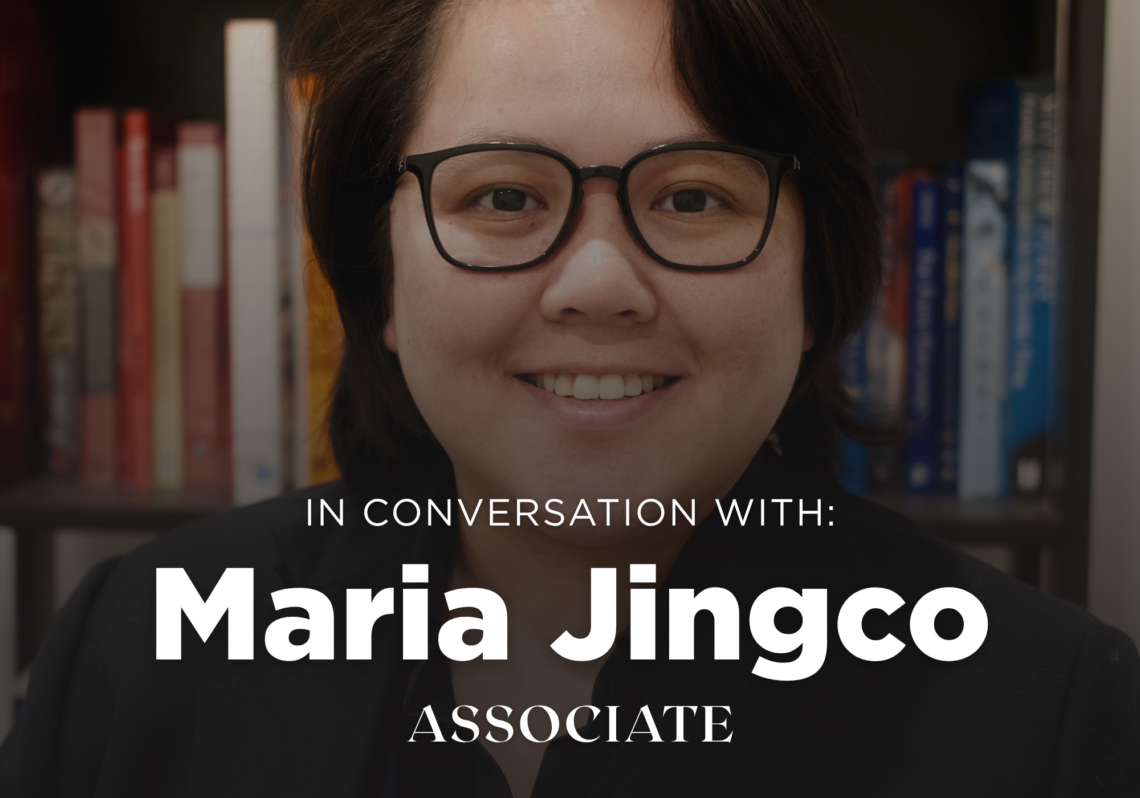
Supporting clients through a family matter requires empathy and understanding. Pascale Legal Associate, Maria Jingco, is known for her thoughtful, client-centred style, guiding individuals through complex and often emotional situations.
Practising exclusively in family law, Ms. Jingco assists her people through every stage of their legal matter, balancing advocacy with a calm and strategic mindset.
In this interview, she reflects on her approach to family law, the realities of guiding clients through complex matters, and the importance of honest communication.
What drew you to practice exclusively in family law?
For me, it’s the ability to directly help people and see the impact my work has on their lives. Family law can be highly emotional, but there’s a great deal of satisfaction in helping clients navigate difficult situations and achieve positive outcomes. Matters involving children are especially meaningful, as you’re advocating for arrangements that are in their best interests.
What makes family law different is how personal it can be. These aren’t just legal issues. They’re people’s lives, relationships, and futures. I naturally become invested in my clients, especially when I feel someone has been unfairly portrayed or unjustly vilified. Being able to help them feel vindicated is really rewarding.
How do you approach building trust with clients during what can be a very emotional time?
I believe building trust with clients comes down to honest communication and ensuring they feel supported throughout the process. It’s important clients understand where their matter stands, and feel comfortable reaching out whenever they need guidance.
As communication can look different for everyone, I try to tailor my approach to suit every individual. I recognise legal matters can be stressful and uncertain, so I strive to be as proactive and responsive as possible. For me, the most important thing is building relationships founded on transparency, care, and trust, so clients know their matter is being handled thoughtfully.
Family law involves highly personal circumstances. How do you tailor your approach to each client?
I don’t believe there’s a one-size-fits-all approach. Every client processes things differently, and part of my role is understanding what each person needs from me during that time. Some clients need a more empathetic and reassuring approach, while others benefit from a firmer and more direct conversation about where their matter may be heading.
For me, being honest and upfront with clients is one of the most important parts of the job, even when the advice may be difficult to hear. I’d rather clients have the opportunity to process that information with my support than hear it for the first time in court.
But, at the end of the day, no matter which approach I take, it always comes from wanting the best possible outcome for my clients and helping them make informed decisions about their future.
What are some of the main challenges clients face in family law matters, and how do you help them navigate these?
One of the biggest challenges clients face, from my perspective, is understanding how family law actually works, particularly when the legal outcome may not align with what they initially expected. Many clients come into it with a strong emotional perspective, or a fixed idea of what should happen. Part of my role is helping them understand the legal and practical considerations involved. That can be difficult, especially when emotions are high, or when conflict between parents begins to impact decision-making around children.
I try to approach these conversations with empathy and honesty. Rather than simply telling a client they’re ‘wrong’ in a legal sense, I ask questions that help them reflect on the situation and consider other perspectives themselves. I never want clients to feel their experiences or emotions are being dismissed, because those feelings are valid.
At the same time, it’s important they understand how the court may view the matter and what a realistic outcome could look like. For me, it’s about guiding clients through the process in a way that is supportive, respectful, and focused on achieving the best possible outcome.
How do you approach matters involving children or vulnerable parties? Does it vary much to how you would typically approach a case?
Matters involving children always require a careful and considered approach, because the child’s best interests are ultimately at the centre of every decision. When acting for a parent, my role is still to advocate strongly for their position, whether that involves supporting their time with the child or addressing concerns about risk. That means presenting the facts in a way that best advances their case, while still keeping the broader considerations around the child’s wellbeing in mind.
My approach does shift when working on matters involving an Independent Children’s Lawyer (ICL), because the focus becomes much more centred on objectively assessing both parties and what outcome is genuinely in the child’s best interests. In those matters, you have to look critically at all aspects of the situation rather than advocating solely from one parent’s perspective.
With vulnerable clients, particularly older clients, I take extra care in how I communicate and support them throughout the process. This is especially important when they may feel overwhelmed by the legal system. I try to make the process as clear, calm, and manageable as possible so they feel understood throughout their matter.
What do you find most rewarding about your work?
Being able to help people through some of the most difficult periods of their lives. That’s what drew me to the profession in the first place. I’ve always believed that if you focus on doing meaningful work and genuinely helping people, the rest will follow.
There’s a real sense of satisfaction in achieving a positive outcome for a client, particularly in matters involving children. Knowing that you’ve helped a family move toward a safer or more stable situation, and that a child may ultimately be in a better place because of the work you’ve done, is really meaningful. Even though the role can sometimes be demanding and thankless, those outcomes make it worthwhile.
When you’re not working, what do you enjoy doing?
I like getting outdoors whenever I can. I really enjoy looking after my lawn, which probably sounds a bit mundane, but I find it really relaxing. It helps me switch off because it’s very hands-on and methodical. There’s a real sense of satisfaction in seeing the finished result too. Keeping it well-maintained takes effort, so when I come home and see it looking pristine, it feels like my own little work of art.
—
If you require legal assistance, Maria Jingco, and the team at Pascale Legal can assist. Contact us today on (08) 8250 0404, or visit our website.