

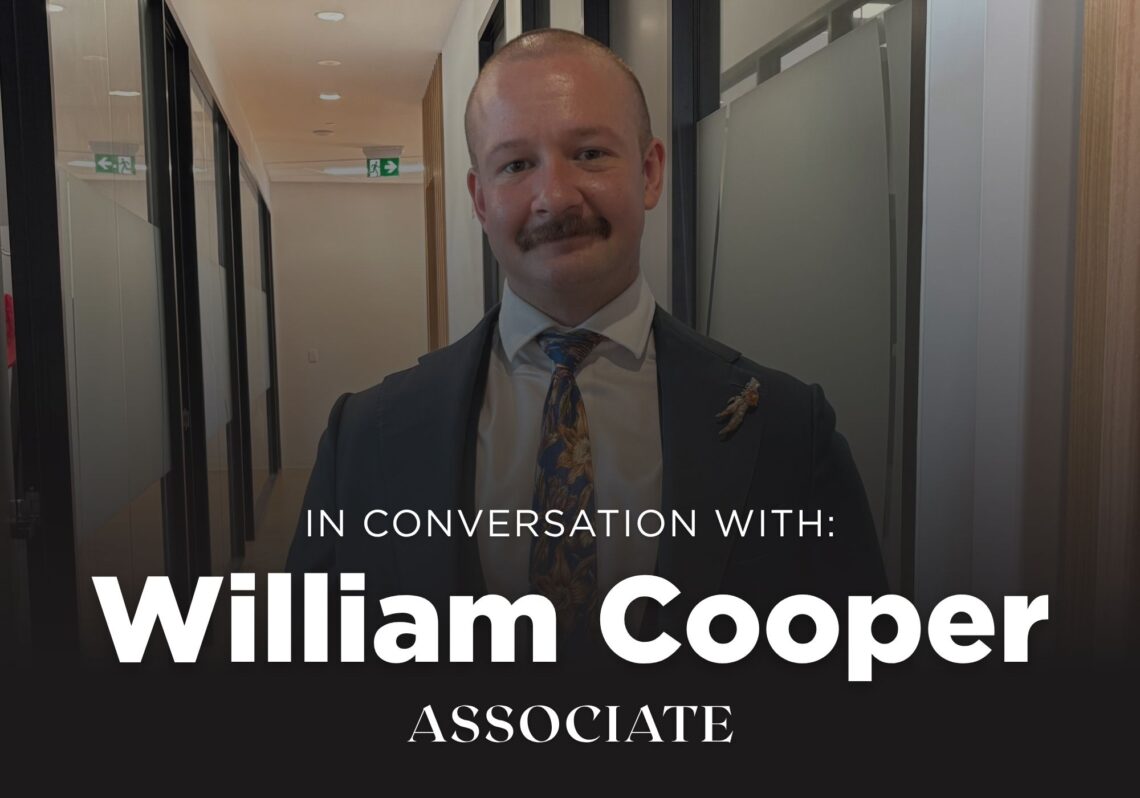
Defending someone’s rights demands clear strategy, sound judgement, and practical advice. Pascale Legal Associate, William Cooper, adopts a no-nonsense approach, guiding his clients through complex matters with clarity and precision.
Practising in family and criminal law, Mr. Cooper manages a diverse caseload, pairing strong advocacy with practical, outcome-driven results.
In this interview, he shares his journey into the legal profession, what motivates his work, and the importance of balancing empathy with reason.
What led you to choose a career in law?
Well, I was initially pursuing a degree in education and arts, but was often told by my lecturers that I’d ‘end up being burnt out and quit within five years.’ Some point after that, I started considering law as an option. I can’t recall my exact thought process, but I once started pursuing it, I quickly found it was something I really enjoyed.
Looking back, there was also an experience that left a strong impression on me. When I was 18, I attended the Magistrate’s Court for a minor offence. It was my first exposure to the justice system, and neither my mum nor I really knew what to expect. But, we met with a Duty Solicitor at the court who prepared a statement for me to present for sentencing.
I remember thinking how impactful a role like that could be. For awhile, I considered becoming a Duty Solicitor — someone who can help a large number of people navigate the system every day. While I can’t say I trace my career path back to that moment, it was certainly a formative experience.
What do you find most fulfilling about your work?
Being able to support people during some of the most difficult moments in their lives. Regardless of their situation, they’re often coming to us at a time when they feel overwhelmed and uncertain. Being able to stand alongside my clients, and guide them through those difficult moments, is really satisfying.
I also find it rewarding to step in and provide direction, particularly when someone doesn’t know where to begin. Being able to map out the process and say, ‘This is how we’ll approach it,’ can give clients a real sense of direction.
When you prepare for a case, what are some of the key things you focus on to ensure nothing is overlooked?
I focus on identifying any potential risks early, so nothing takes us by surprise. That means having open and honest conversations with clients about their circumstances, particularly anything that could come under scrutiny.
I also consider what the opposing party is likely to say and prepare for different scenarios. In many cases, it’s not uncommon for both sides to make competing allegations, so being ready to respond is key.
Ultimately, it comes down to trust. I try to create an environment where clients feel comfortable about being upfront, because the more I understand, the better I can support them.
You’re known for your clear and direct approach. How do you believe this benefits your clients during their situation?
I think it helps clients to know where they stand. I always try to be upfront about what’s realistic, rather than giving false reassurance. If something is unlikely to be accomplished, it’s important clients know that early, so they can make informed decisions.
At the same time, that honesty gives us a solid foundation to work from. If there are any challenges, we can identify practical steps to address them and work towards an achievable outcome. It allows my clients to focus on realistic goals and feel more in control of the process.
The role you’re in can be highly emotional. How do you support clients while still maintaining a strategic focus?
For me, it’s all about balance. Clients are often going through very emotional situations, so it’s natural you want to support them. At the same time, it’s important to step back and approach the matter objectively, even if it means having difficult conversations.
Part of that involves considering the bigger picture, particularly when the other side has a valid point to address. While it’s important to advocate for your client, it’s equally important not to simply adopt their position without question.
Maintaining that perspective allows me to support them in a way that is both compassionate and strategic, ensuring they receive guidance that is clear and informed.
In your opinion, what’s one misconception people have about the legal process?
I think many people assume the legal process is faster than it actually is. In reality, it takes longer than expected. Even relatively simple matters can take months, while more complex cases — particularly in family law — can take much longer.
There are many factors that influence timing, and it’s not always possible to control the pace. It’s rarely a quick fix, so understanding that from the outset can help manage expectations.
Outside of the courtroom, how do you like to spend your time?
I enjoy spending as much time outdoors as possible. My wife and I bought a home a couple years ago, so I’ve been spending a lot of time gardening.
I also enjoy hiking, caving, and anything that gets me out into nature. I find that it’s a great way to reset. Helps clear my mind and balance the intensity of the job.
—
If you require legal assistance, William Cooper and the team at Pascale Legal can assist. Contact us today on (08) 8250 0404, or visit our website.